Fourth-Harmonic Generation (FHG)
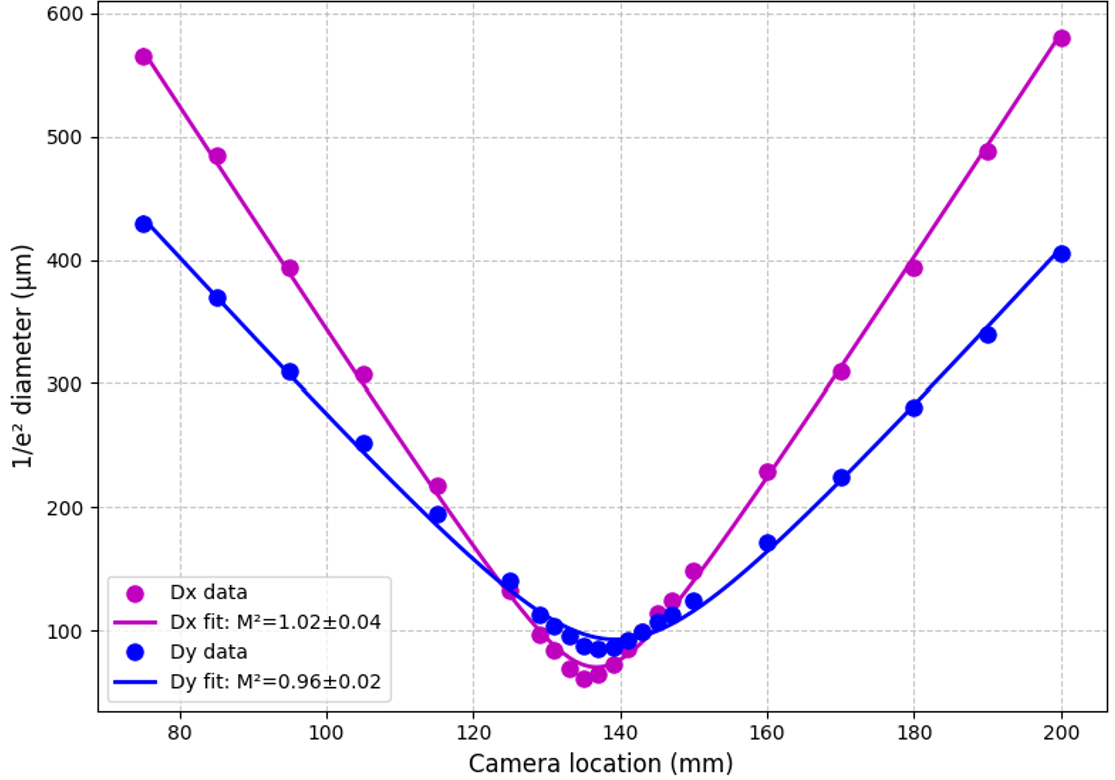
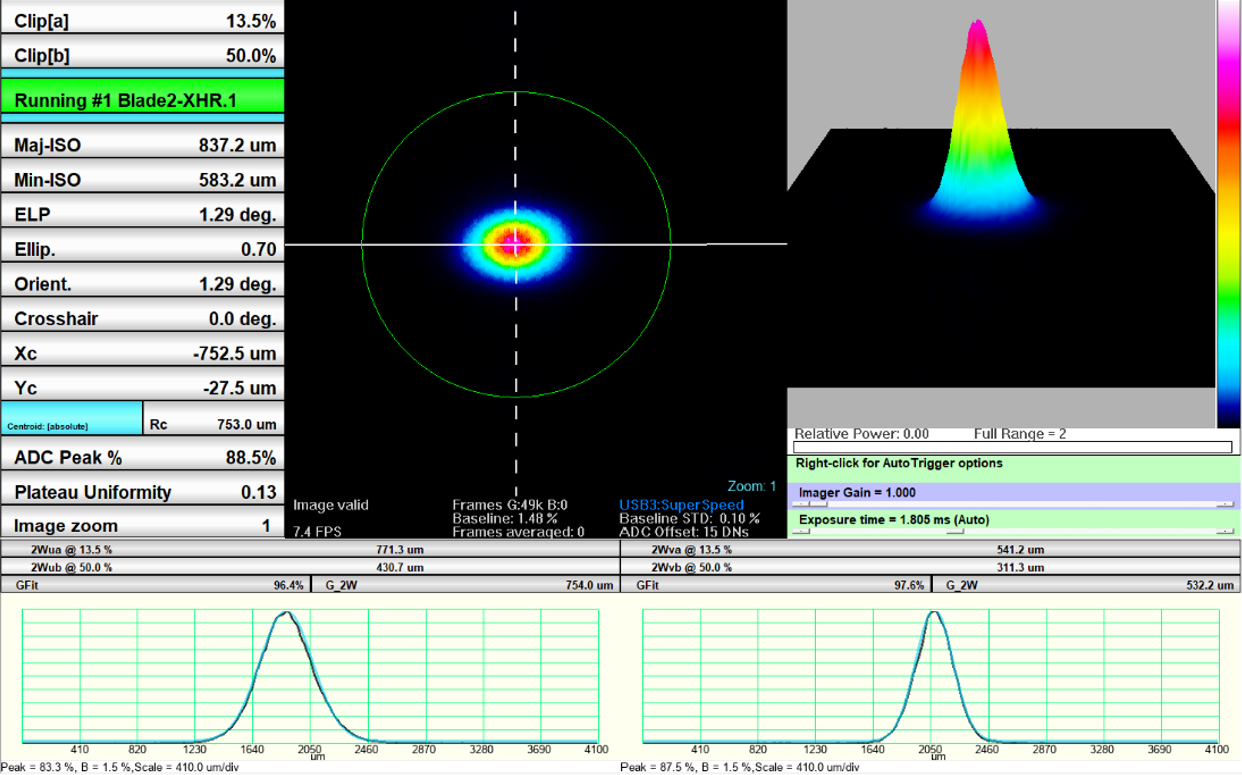
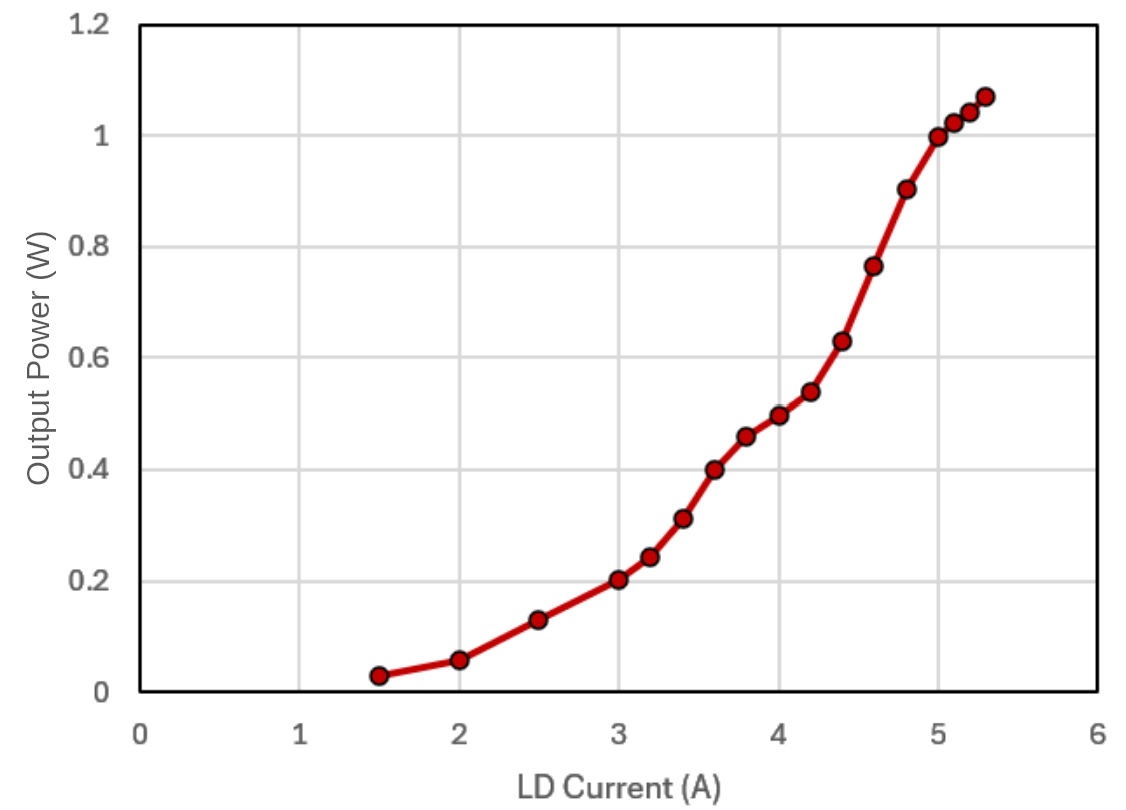
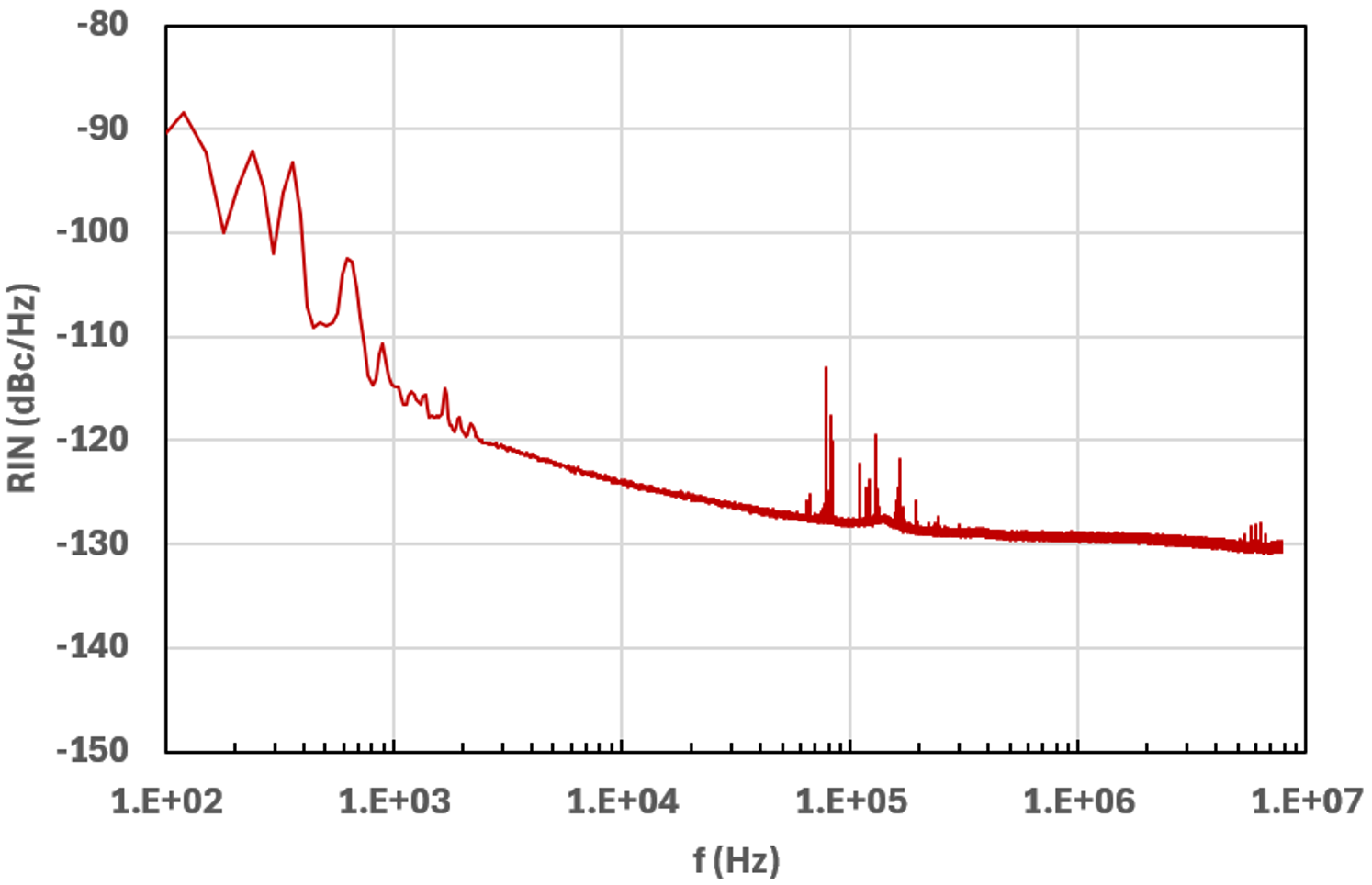
QTekLaser™ further extends the wavelength range of its fiber lasers by cascading two second-harmonic generation (SHG) stages. The output of a single-frequency fiber amplifier is first frequency-doubled. The resulting light is then doubled again in a second nonlinear crystal, producing light at one quarter of the fundamental wavelength (figure 4). Starting from our Tm-doped fiber amplifiers (1730 – 2060 nm), fourth-harmonic generation (FHG) reaches the blue-green regime from 432 to 515 nm. High-power, narrow-linewidth light at these wavelengths is difficult to obtain directly from diode or fiber sources. Each conversion stage keeps the single-frequency character of the seed laser, so FHG systems deliver narrow linewidth, low relative intensity noise and excellent beam quality. The maximum power of FHG systems is constrained by the combined efficiency of the two conversion stages and by the damage threshold of the nonlinear crystals at shorter wavelengths.
Output Wavelength Matrix
|
SF-AMP-Yb2
(506 – 556 nm) |
SF-AMP-Tm2
(865 – 1030 nm) |
SF-AMP-Yb
(1012 – 1112 nm) |
SF-AMP-Er
(1530 – 1610 nm) |
SF-AMP-Tm
(1730 – 2060 nm) |
SF-AMP-Yb2
(506 – 556 nm) |
253 – 278 nm |
|
|
|
|
SF-AMP-Tm2
(865 – 1030 nm) |
319 – 361 nm |
432 – 515 nm |
|
|
|
SF-AMP-Yb
(1012 – 1112 nm) |
304 – 371 nm |
466 – 535 nm |
506 – 556 nm |
|
|
SF-AMP-Er
(1530 – 1610 nm) |
380 – 413 nm |
553 – 628 nm |
609 – 658 nm |
765 – 805 nm |
|
SF-AMP-Tm
(1730 – 2060 nm) |
391 – 438 nm |
576 – 687 nm |
638 – 722 nm |
812 – 904 nm |
865 – 1030 nm |
Table 1. Wavelength extension of QTekLaser™ products via nonlinear frequency conversion. Yb² and Tm² denote frequency-doubled Yb and Tm amplifiers. Red: harmonic generation (SHG, or FHG via two cascaded SHG stages). Blue: sum-frequency generation (SFG), including cascaded SHG+SFG.

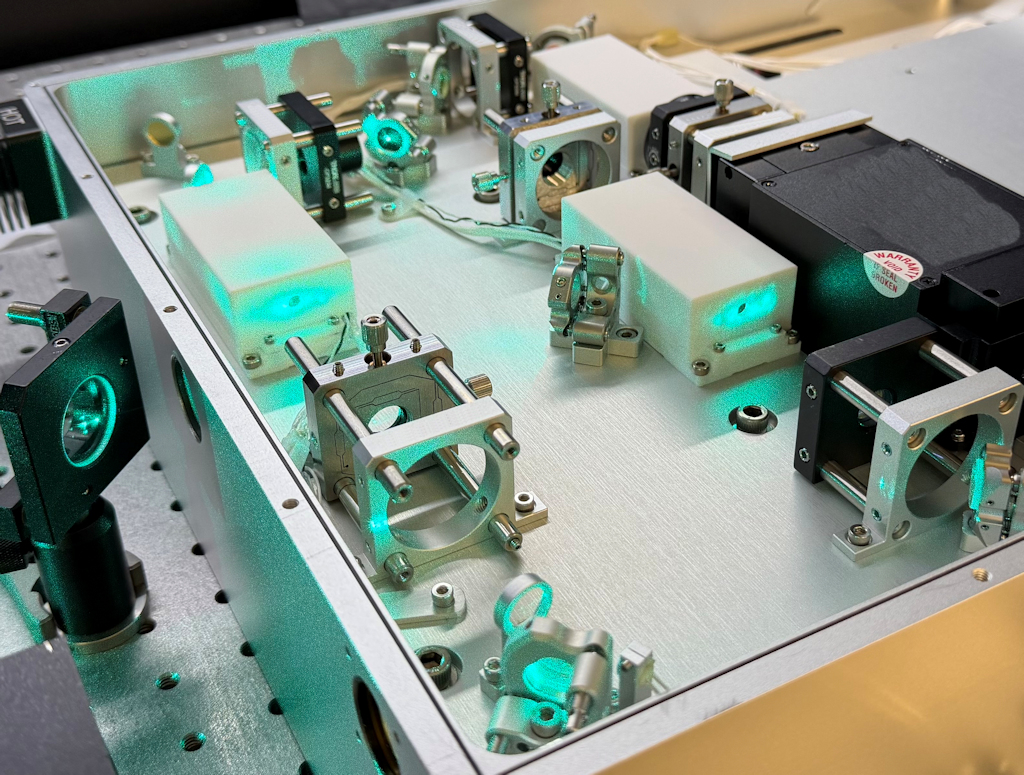
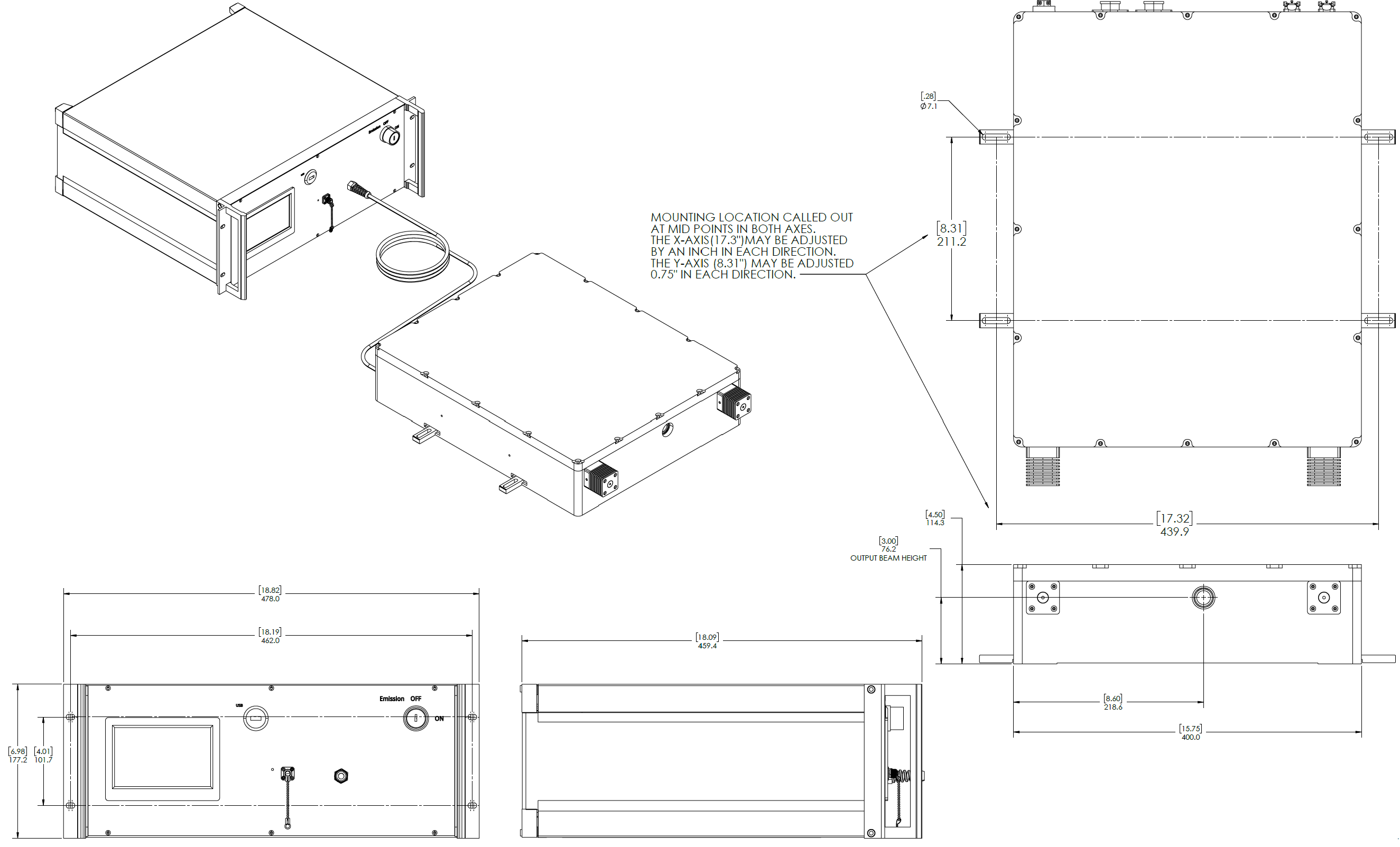
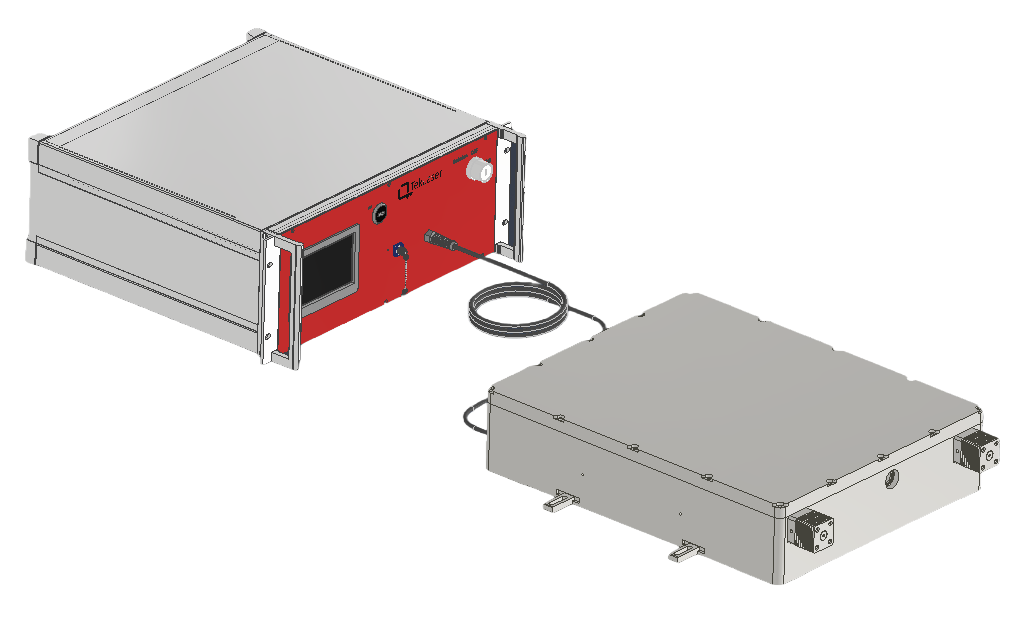
Figure 2. QTekLaser™ fiber laser with fourth-harmonic generation (FHG).