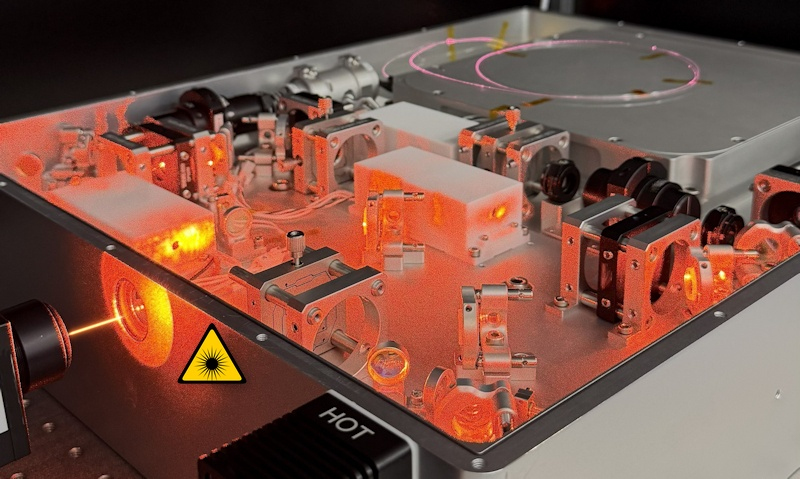
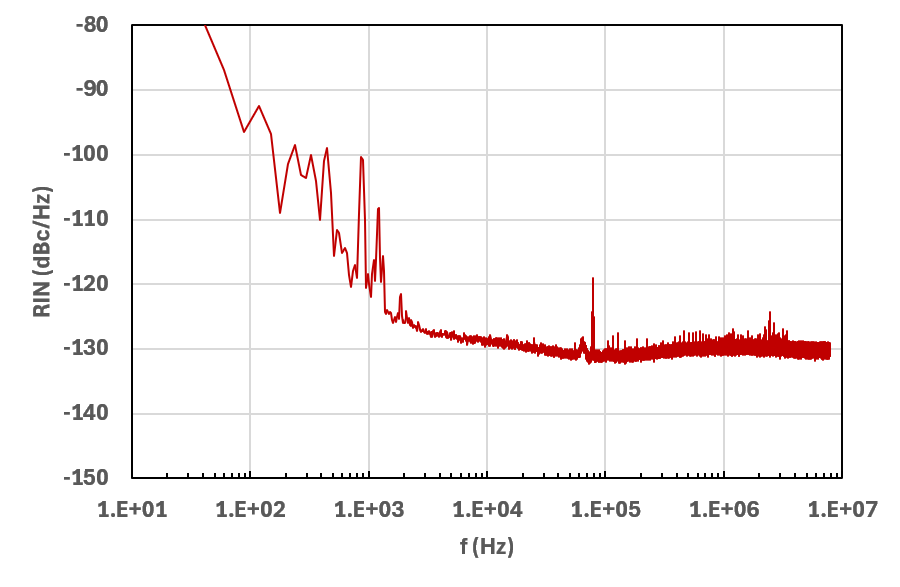
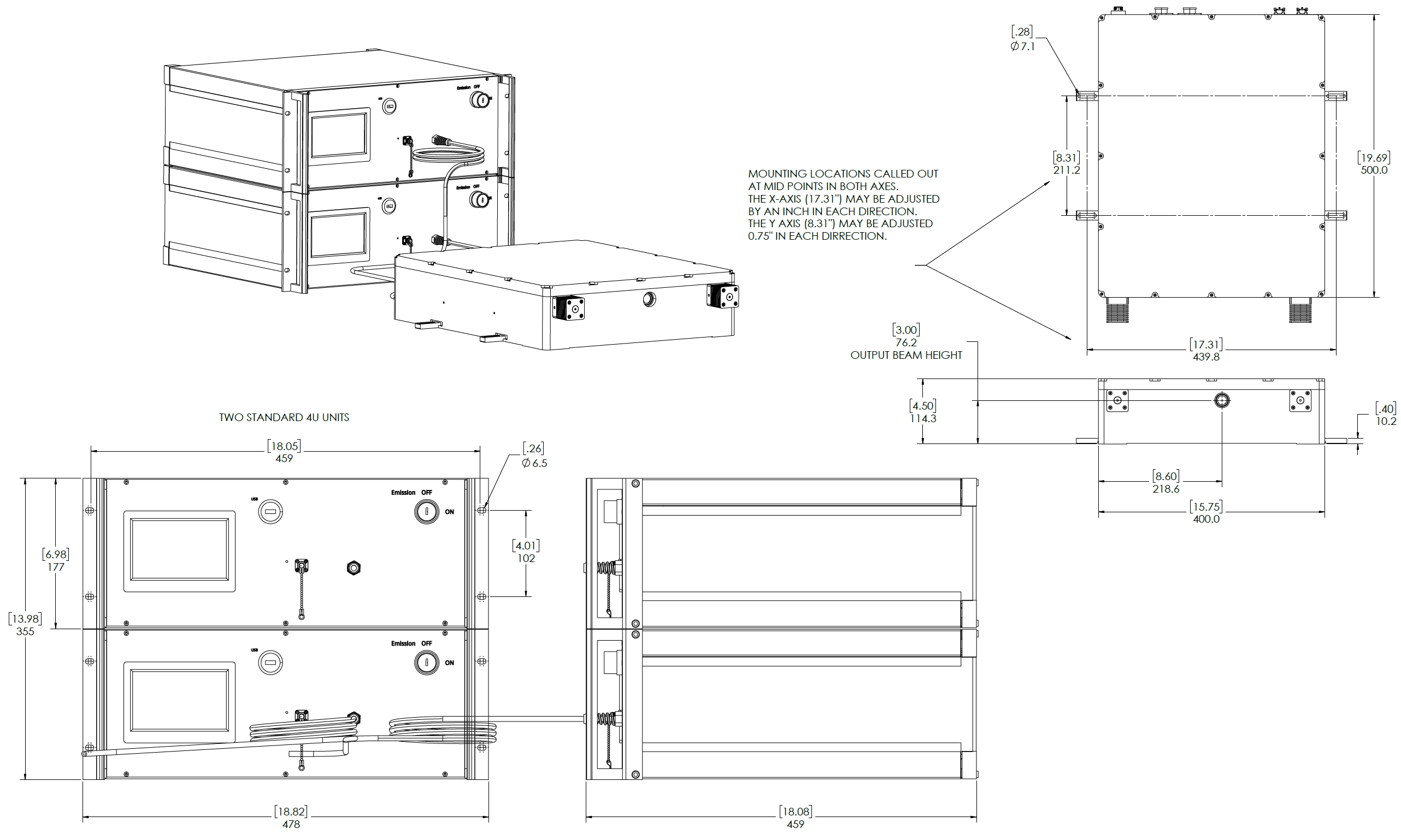
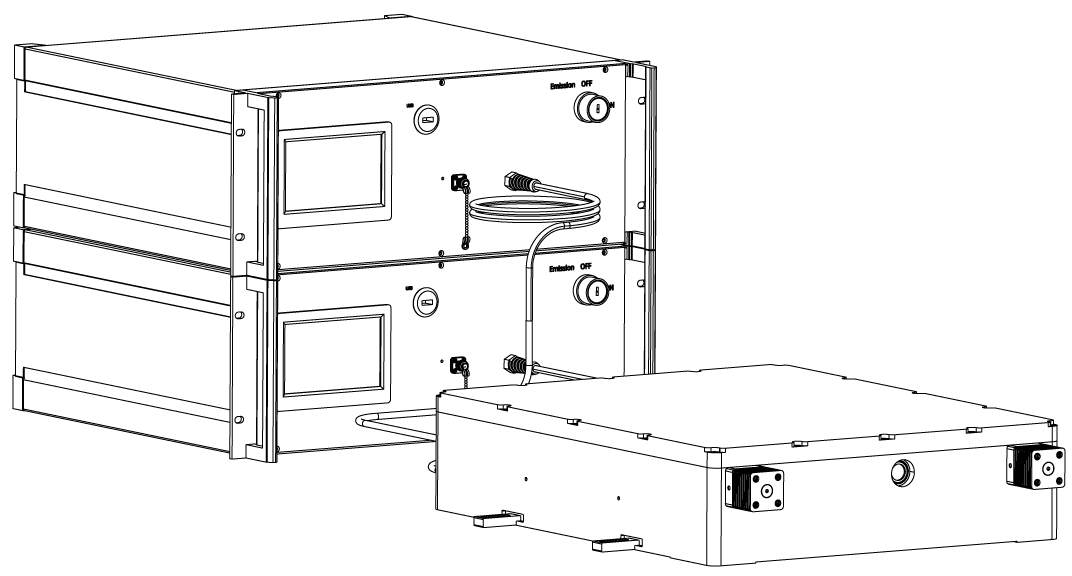
The QTekLaser™ 604 nm Fiber Laser combines second-harmonic generation (SHG) and sum-frequency generation (SFG) to deliver stable, single-frequency, polarization-maintaining light up to 6 W at 603.8 nm. Beam quality is < 1.1 and relative intensity noise stays below -125 dBc/Hz above 10 kHz. An IoT-enabled interface and 19" rack-mount chassis make it straightforward to integrate into quantum and precision-spectroscopy systems.
Need a different wavelength? The 604 nm system is one configuration of our sum-frequency (SFG) platform covering 553–628 nm. We routinely build custom wavelengths across this range. Tell us your target line.
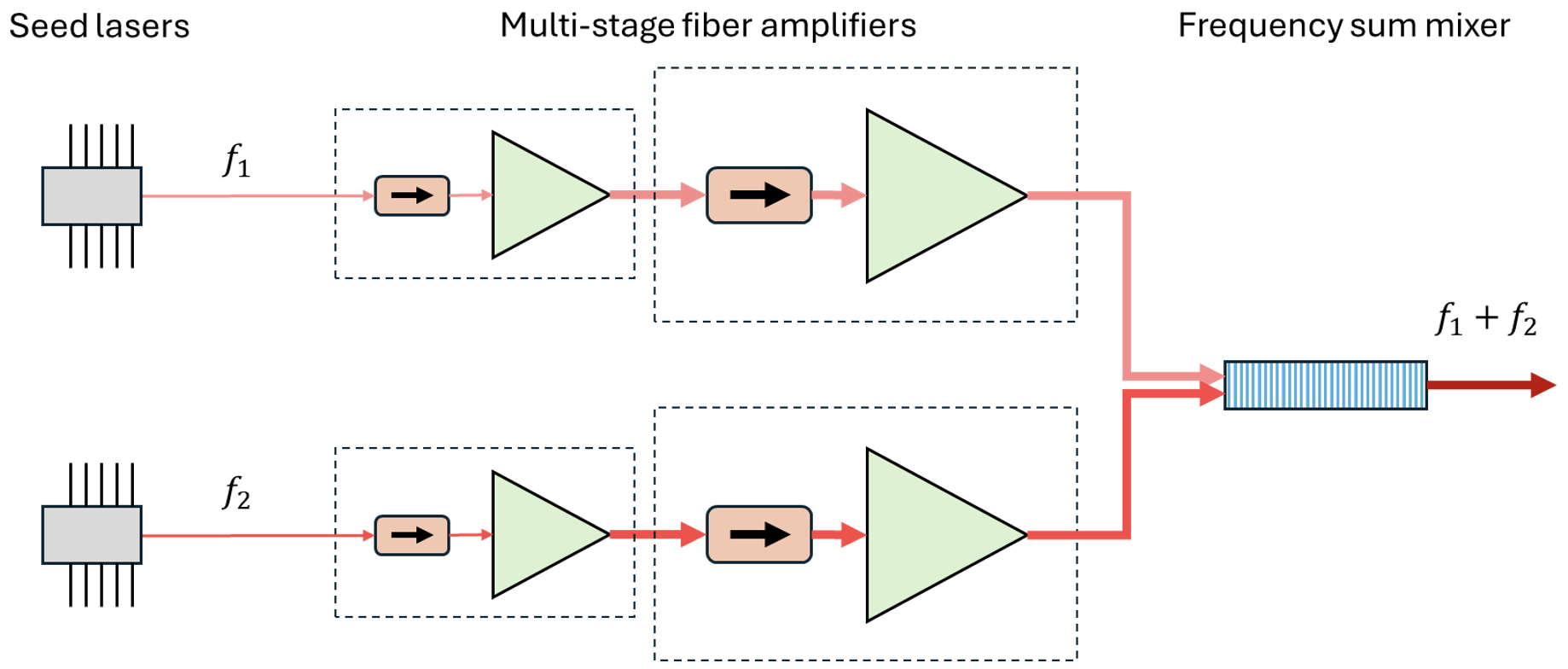
The wavelength range of QTekLaser™ products can be further extended using the nonlinear processes of second-harmonic generation (SHG) and sum-frequency generation (SFG). The 604 nm system uses both: a 1987.3 nm Tm-doped fiber amplifier is frequency-doubled to 993.7 nm, and that light is then sum-mixed with a 1539.0 nm Er-doped fiber amplifier to produce 603.8 nm. The SFG architecture is illustrated in figure 1. The extended wavelength values are summarized in the blue-shaded cells of table 1; 604 nm falls in the Er × Tm² band spanning 553–628 nm. This method achieves high power at wavelengths no fiber gain medium reaches directly.
Figure 1. QTekLaser™ sum-frequency generation (SFG) fiber laser system. The frequency sum mixer is integrated into the product.
SFG Output Wavelength Matrix
SF-AMP-Tm2 (865 – 1030 nm)
SF-AMP-Yb (1012 – 1112 nm)
SF-AMP-Er (1530 – 1610 nm)
SF-AMP-Tm (1730 – 2060 nm)
SF-AMP-Yb (1012 – 1112 nm)
466 – 535 nm
506 – 556 nm
SF-AMP-Er (1530 – 1610 nm)
553 – 628 nm
609 – 658 nm
765 – 805 nm
SF-AMP-Tm (1730 – 2060 nm)
576 – 687 nm
638 – 722 nm
812 – 904 nm
865 – 1030 nm
Table 1. Wavelength extension of QTekLaser™ products via nonlinear frequency conversion. The red-shaded cells represent second-harmonic generation (SHG) and the blue-shaded cells sum-frequency generation (SFG).
QTekLaser™ lasers comply with Federal Regulations (21 CFR Subchapter J, Part 1040) as administered by the Center for Devices and Radiological Health and are certified to IEC 60825-1:2014 standards.
It is the end user's responsibility to ensure that no significant light is retroreflected back into QTekLaser™ systems as this can degrade performance and potentially damage the lasers. To prevent this, the use of an external optical isolator is strongly recommended. Damage due to retroreflected light is not covered under warranty.
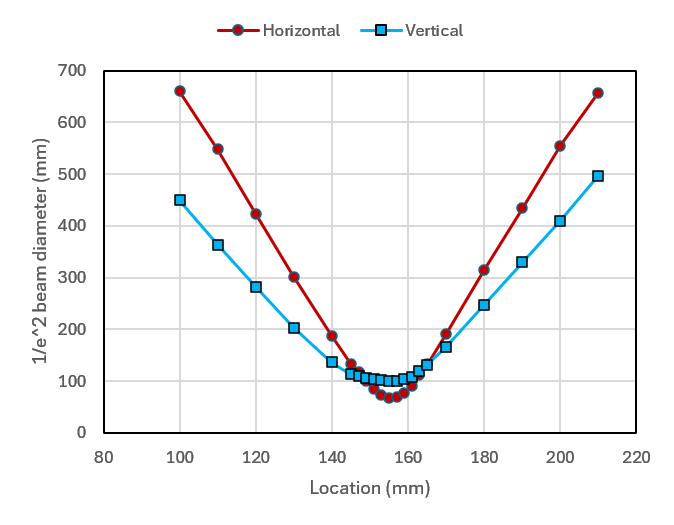
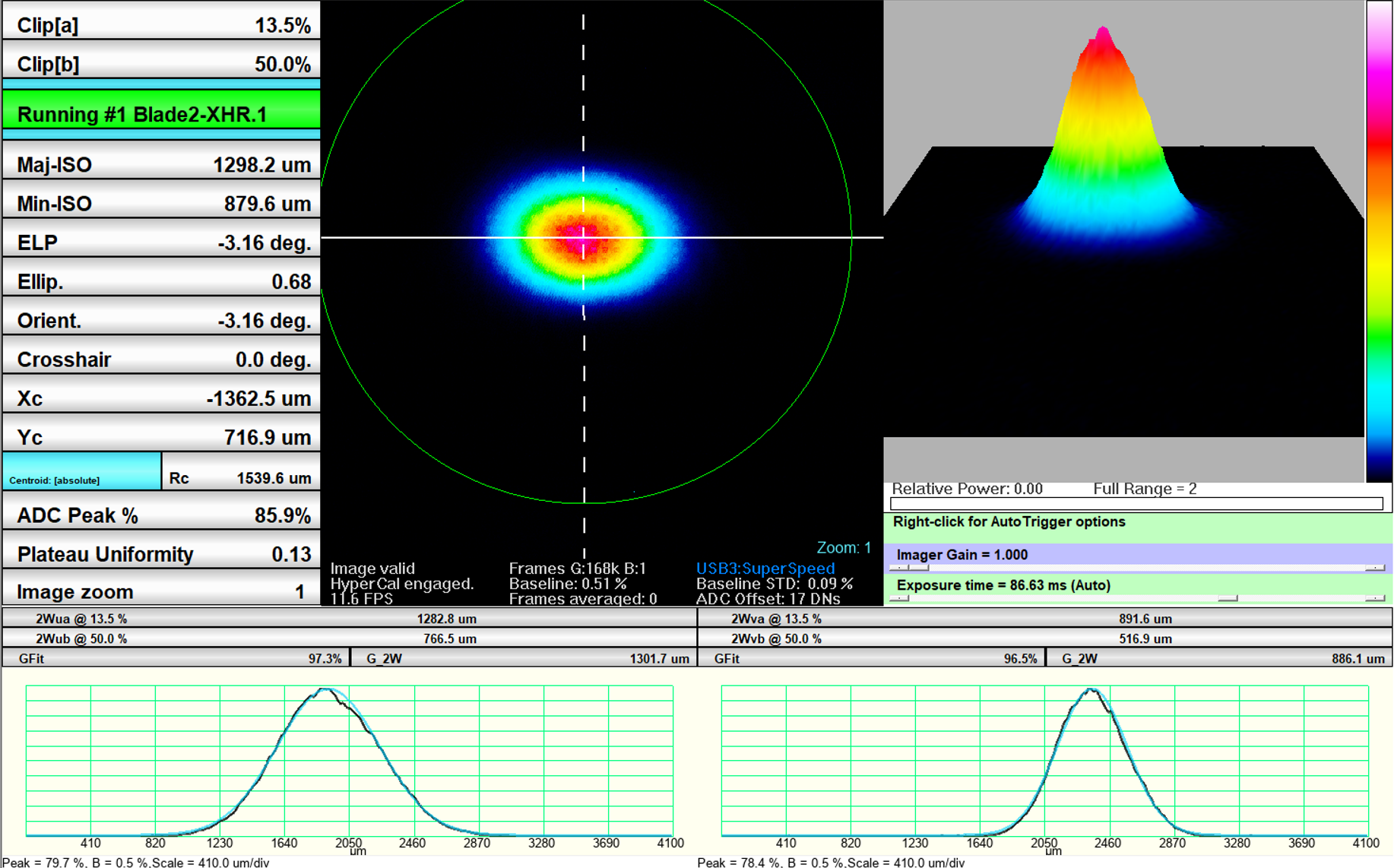
Figure 3. Beam profile at 604 nm. 1/e² beam diameter 1.3 mm horizontally and 0.9 mm vertically.
Optical Spectrum
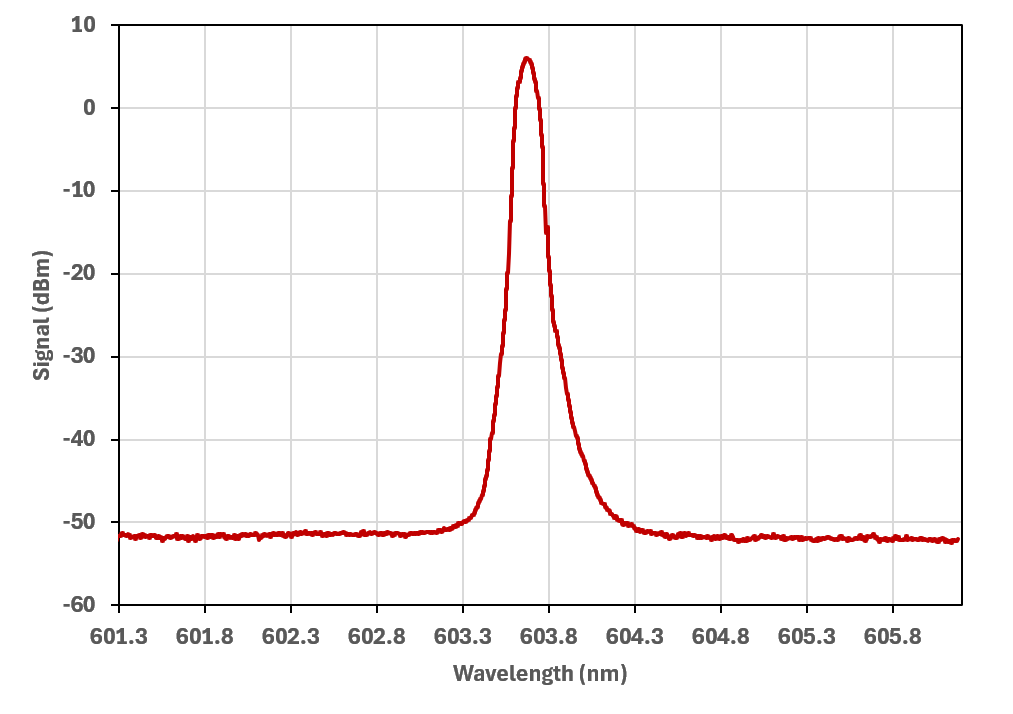
Figure 4. Optical spectrum at 6 W, measured with an Anritsu MS9710B optical spectrum analyzer at 0.001 nm resolution. The optical signal-to-noise ratio (OSNR) is 58 dB.
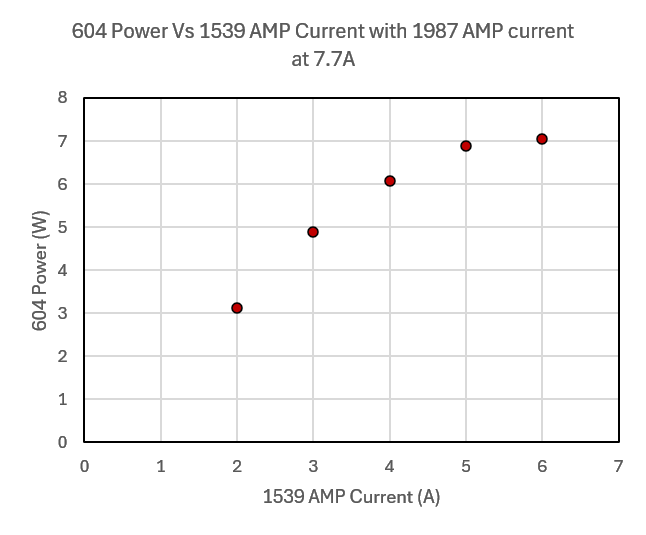
Figure 6. Output power at 604 nm vs. 1539 nm amplifier current, with the 1987 nm amplifier held at 7.7 A.
Power vs. 1987 nm Amplifier Current
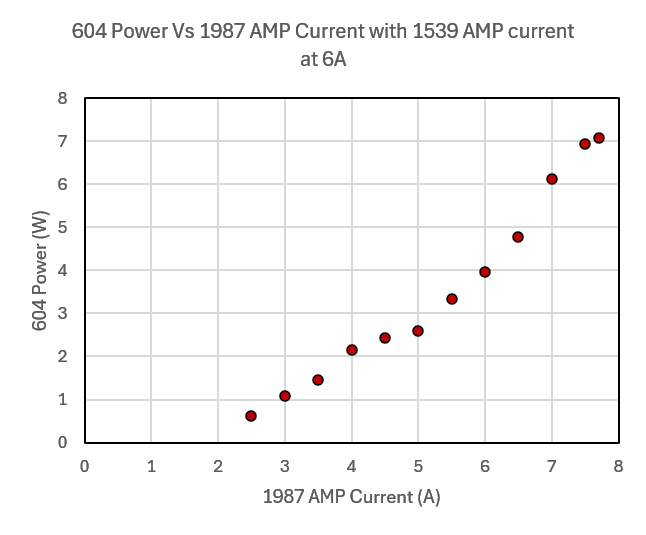
Figure 7. Output power at 604 nm vs. 1987 nm amplifier current, with the 1539 nm amplifier held at 6 A.
Quantum Applications
The 604 nm system delivers 6 W of single-frequency orange-red light for quantum computing and atomic physics. Its narrow linewidth, M² <1.1, and low relative intensity noise (<-125 dBc/Hz above 10 kHz) suit coherent manipulation and readout of atomic and solid-state qubits, where added amplitude noise translates directly into gate and measurement error. This is usually doubled to 302 nm.